Munich-based Allianz will explore new opportunities in the Indian insurance market not only as an investor but also as an operator, the company told Business Standard on Tuesday. "India will continue to be one of Allianz's main growth markets, and Allianz will explore new opportunities to further grow its participation in the Indian insurance market in the future, not only as an investor but also as an operator," the company said.

'The introduction of a reasonable MDR for large merchant transactions will allow the industry to continue investing in innovation, cybersecurity, grievance redressal, and merchant support, ultimately ensuring that UPI continues to thrive.'

Banking credit in the economy grew by 11.1 per cent year-on-year (Y-o-Y) in the fortnight ended March 7, while deposits grew at 10.2 per cent during the same period, which is a gap of around 90 basis points (bps), according to the latest data from the Reserve Bank of India (RBI).
US-based Citigroup is likely to allocate more global roles to India than to any other centre it operates in due to the country's strong talent pool, said Jane Fraser, chief executive officer of Citigroup, on Wednesday in an interaction with CNBC-TV18. Fraser also expressed confidence that India will remain the world's fastest-growing economy.

'The only solution is for the government to allow us to charge a low controlled MDR of 25 bps on UPI P2M transactions only for merchants with more than a Rs 40 lakh turnover.'

Religare Enterprises Ltd (REL) on Monday notified the exchanges that its Board has commissioned a governance review of REL and its subsidiaries - Religare Finvest and Religare Housing Development Finance. Additionally, the Board has decided to approach the new promoters, the Burman Group, for immediate funding support to sustain operations of the company.

The entire construction of the Navi Mumbai airport project is expected to be completed in five phases.
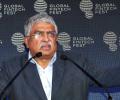
'Binary fission will happen -- startups will lead to more startups.'

Since Sanjay Malhotra took office as governor in December, the Reserve Bank of India (RBI) has adopted a more accommodative stance, which bodes well for banking and the economy as they navigate a growth slowdown, according to analysts.

It is the first airport in the country to have multi-modal connectivity. This includes a linkage to the project via road, rail, and a metro system.

Non-banking entities such as fintech firms will have to tap into use cases beyond peer-to-peer (P2P) and peer-to-merchant (P2M) transactions to scale up the presence of the retail version of the central bank digital currency (CBDC), which is also known as the e, said industry players. These use cases will enable programmable transactions across domains, including the government's direct benefit transfer (DBT) schemes, with subsidies restricted to specific purposes such as food coupons, hospital bills, fertilisers, pesticides, and cross-border remittances.
Kotak Mahindra Bank's net interest margin is likely to swell after the Reserve Bank of India (RBI) lifted its restrictions on the private lender that barred it from issuing fresh credit cards and onboarding new customers through digital mode, brokerages said on Thursday. The bank's net interest margin (NIM) has seen a decline of over 35 basis points (bps) since the restrictions were imposed by the regulator in April 2024.

Dream11, Baazi Games, Zupee and WinZO among others are invited for the discussion with the anti-money laundering watchdog.

The co-operative banking sector is well regulated, and a few cases of restrictions being imposed by the Reserve Bank of India (RBI) should not paint a negative picture of the entire sector, said Department of Economic Affairs (DEA) secretary Ajay Seth on Monday. "Co-operative banks in the country are generally quite robust, and the RBI takes regulatory action whenever issues arise.
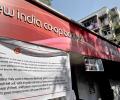
Currently, deposits of up to Rs 5 lakh are covered under the deposit-insurance scheme.

'However, this process will take some time. Depending on the approval timeline, it may span a few quarters.'

'We have opened 100 branches in the last one and a half years. Our manpower is also in place.'
Currently there are 26 licensed players in the P2P lending sector but only 10-11 are actively operating.

With short-term rates firming up due to tight liquidity conditions, Indian corporates are opting to borrow long term to take advantage of the attractive rates by locking them in these uncertain times. The banking system has a liquidity deficit of over Rs 2 trillion. According to market participants, engineering conglomerate Larsen & Toubro (L&T) raised Rs 1,500 crore through 10-year bonds in December 2024.

Fintech firm BharatPe is targeting an initial public offering (IPO) in the next 18-24 months with the company expecting profitability at an earnings before interest, taxes, depreciation and ammotisation (Ebitda) level for FY25, chief executive officer (CEO) Nalin Negi said.
 © 2026 Rediff.com - Advertise with us - Disclaimer - Privacy Policy - Sitemap - Feedback - About us - Terms of use - Grievances